


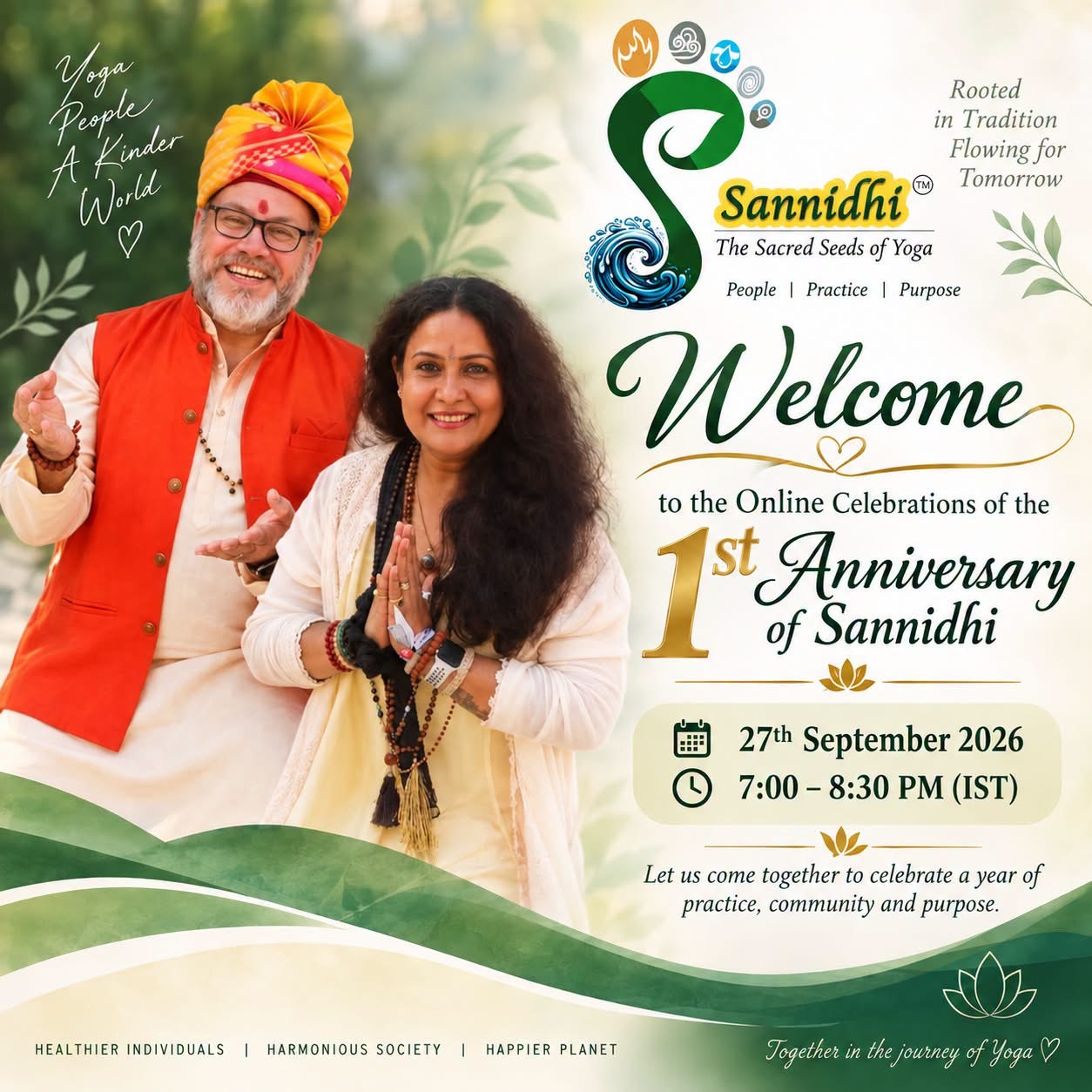
On 27 September 2026, Sannidhi – Sacred Seeds of Yoga celebrated its inaugural anniversary. The global gathering brought together scholars, yoga masters, healthcare professionals, researchers, and devoted practitioners to honor a shared mission: preserving and propagating authentic Yoga as a living tradition rooted in the Bharatiya Jnana Parampara.
The event was far more than a look back at an inaugural year; it served as a powerful reminder of how ancient wisdom can directly address the challenges of the modern world. Here are the key highlights and takeaways from the anniversary event.
Grounding in Tradition: The Sacred Seeds of Yoga
The event commenced with a serene invocation led by Yogacharini Anandhi, Founder of Sannidhi. She reflected on the name Sannidhi, defining it as the sacred presence of the Guru, the teachings, the community (Sangha), and the Divine within oneself.
Welcoming the global audience, Guruji Yogacharya Dr. Ananda Balayogi Bhavanani highlighted the symbolic origins of Sannidhi, which was inaugurated during Navaratri in September 2025. He emphasized that while many modern institutions focus on returning to the “roots” of Yoga, Sannidhi focuses on its “Sacred Seeds”—the timeless philosophy of Sanatana Dharma and Indian Knowledge Systems. Guruji also reviewed Sannidhi’s major first-year achievements, including the comprehensive Yoga Darshana course, the Gitananda-tradition Yoga Nidra Teacher Training, and the Ahara Sadhana program exploring food as a sacred discipline.
Keynote Insights: Redefining Health and Knowledge
Distinguished guest speakers offered rich perspectives on the intersection of Yoga, traditional medicine, modern science, and education:
- Moving from “Sick-Care” to True Health (Svasthya): Keynote speaker Prof. Bhushan Patwardhan observed that despite advancements in pharmaceuticals and medical tech, modern societies are becoming increasingly unhealthy because healthcare systems focus on managing disease rather than cultivating health. In contrast, traditions like Ayurveda, Siddha, and Yoga focus on prevention and treating the whole person, guiding humanity toward true Svasthya—abiding in one’s authentic Self.
- Integrative Living and Indigenous Wisdom: Prof. Mala Kapadia discussed how the Bharatiya Jnana Parampara provides a comprehensive framework for purposeful living. She highlighted concepts like Hita Ayu (beneficial life) and Sukha Ayu (happy life), urging a move away from restrictive colonial educational models toward holistic models that integrate physical, emotional, and spiritual growth.
- Yoga Therapy as the “Medicine of Reconnection”: Dominique Ferrera, Executive Director of the International Association of Yoga Therapists (IAYT), noted that modern research is now shifting from asking if Yoga works to examining how and for whom it works. She described Yoga Therapy as a vital tool against modern epidemics of loneliness and burnout, empowering individuals to awaken their innate capacity for self-regulation and self-transformation.
- The Evolution of Education: Er Cecil Anthony reflected on how technology and AI might ironically lead education full-circle back to the highly personalized, individual-centered focus of the ancient Gurukul system, praising Sannidhi for creating structured, evidence-informed traditional programs.
Gratitude from the Sangha
A deeply reflective phase of the event featured tributes from senior mentors and close associates:
- Yogacharya Bharata Bill Francis commended Yogacharini Anandhi Mary Cecil’s meticulous scholarship in making Patanjali’s teachings accessible to modern seekers.
- Yogacharya Michael McCann expressed gratitude for the enriching learning environment cultivated over the past year.
- Yogacharya Alok Dwivedi paid tribute to Guruji Dr. Ananda’s rare lineage—having received direct transmission from two realized preceptors, his parents Yogamaharishi Dr. Swami Gitananda Giri Guru Maharaj and Yogacharini Ammaji Meenakshi Devi Bhavanani.
- Shaktimaa Devasena Bhavanani shared a moving analogy comparing Sannidhi to entering a temple’s sanctum sanctorum, where personal desires dissolve into the experience of inner wholeness.
Closing Words: The Call to Atma Vichara
In his closing reflections, Guruji Dr. Anandaji reminded participants that the core purpose of yogic study is Atma Vichara (deep self-reflection). Quoting Param Pujya Ammaji, he urged everyone to observe themselves “without identification, without condemnation, and without justification,” transitioning from complaints to deep gratitude.
By moving through the guidance of the Yamas and Niyamas, individuals can evolve from the subhuman to the human, the humane, and ultimately manifest their inner divinity. With clear vision and strong roots, Sannidhi enters its second year committed to serving humanity through undiluted teachings and transformative practice.
Yogacharini Anandhi concluded the event by expressing gratitude to all present and led the Sannidhi Sangha in Shanti Path.
